
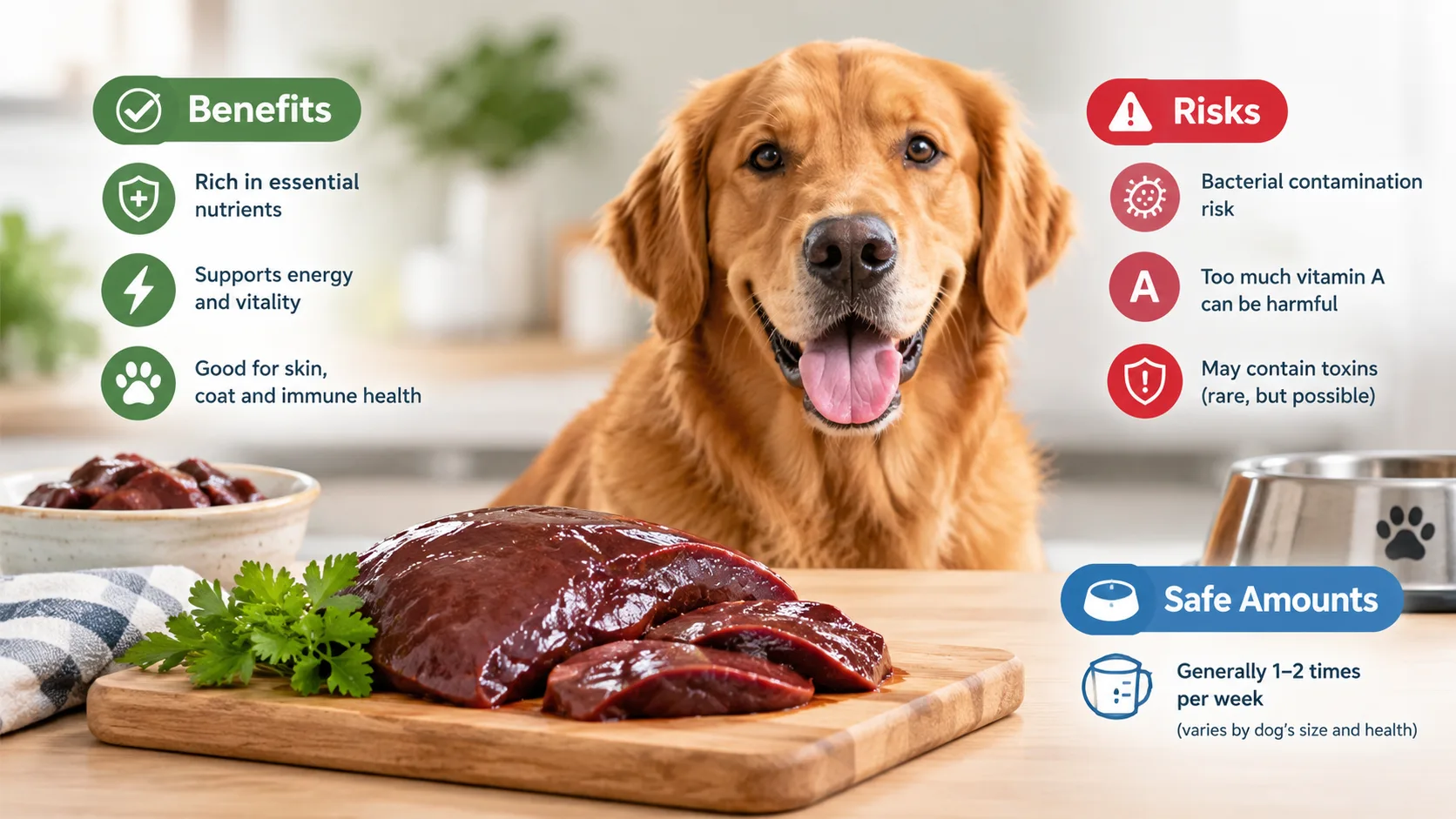
Open a bag of liver treats and watch what happens. Even the pickiest dog shows up out of nowhere, eyes
Open a bag of liver treats and watch what happens. Even the pickiest dog shows up out of nowhere, eyes locked on your hand. That reaction makes sense. Liver smells strong, tastes rich, and is packed with the kind of nutrients dogs are naturally drawn to.
But a dog loving something doesn’t automatically make it good for them. So if you’ve been wondering whether beef liver is good for dogs, or how often you can safely hand it over, you’re asking exactly the right questions.
In this guide, we’ll walk through what beef liver actually offers, where it can go wrong, how much is reasonable, and how to pick a good one. We have two dogs of our own, Luka and Luna, and this is the kind of straight answer we wanted when we started looking into it ourselves.
Quick answer: Yes, beef liver is good for most healthy dogs when it’s fed in small amounts as a treat or food topper. It’s rich in protein, vitamin A, vitamin B12, iron, and zinc. But it’s also very high in vitamin A and copper, so it shouldn’t be fed in large portions or every single day. If your dog has a liver condition or belongs to a breed prone to copper storage problems, talk to your vet first.
Is Beef Liver Good for Dogs?
For most healthy dogs, yes. Beef liver is a nutrient-dense organ meat that dogs digest well and love eating. Used in small amounts, it adds protein and a long list of vitamins and minerals on top of a complete and balanced diet.
The key phrase there is “on top of.” Liver isn’t a meal. Think of it the way you’d think of a multivitamin that happens to taste amazing. A little goes a long way, and more is not better.
This is also where a lot of online advice goes wrong. You’ll see liver called a “superfood,” and in a sense it is. Gram for gram, it packs in far more vitamins and minerals than ordinary muscle meat. But the same density that makes it impressive is what makes it easy to overdo. We’ll get into exactly how in a minute.
What’s Actually in Beef Liver?
Here’s what makes liver stand out compared with a regular piece of beef:
- Protein: Supports muscle maintenance and everyday energy.
- Vitamin A: Plays a role in vision, skin, coat, and immune function. It’s also the nutrient you need to watch most carefully.
- B vitamins, especially B12 and riboflavin: Involved in energy metabolism and normal nerve function.
- Iron: Helps carry oxygen in the blood.
- Zinc: Supports skin, coat, and the immune system.
- Copper: Necessary in small amounts, but harmful when it builds up over time.
Muscle meat simply doesn’t deliver most of these in meaningful amounts. That’s the reason many raw feeders and nutrition-minded owners include organ meats at all.
It’s also naturally lower in fat than many people assume, which makes it a reasonable choice as a training reward compared with fattier treats. Still, because it’s so concentrated, even a small piece does a lot of nutritional work.
Can Dogs Eat Beef Liver?
Yes, dogs can eat beef liver. It’s safe for healthy adult dogs when it’s plain, fresh, and served in small portions. That means no onion, no garlic, no butter, and no seasoning. Onion in particular is toxic to dogs, so that classic “liver and onions” dinner is one to keep off their plate.
Beef liver can be served a few different ways:
- Cooked: Gently cooked with nothing added. This is often the easiest option for owners who want to cut down on bacteria risk.
- Raw: Popular with raw feeders, but it comes with handling and food safety considerations.
- Freeze-dried: Shelf-stable, lightweight, and easy to break into tiny training-sized pieces.
Whichever form you pick, the same rule applies. Start small, keep it plain, and treat it as an extra rather than the main event.
Can Dogs Have Beef Liver? Who Should Be Careful
Most dogs can have beef liver in moderation. A few should skip it or only eat it with a vet’s approval:
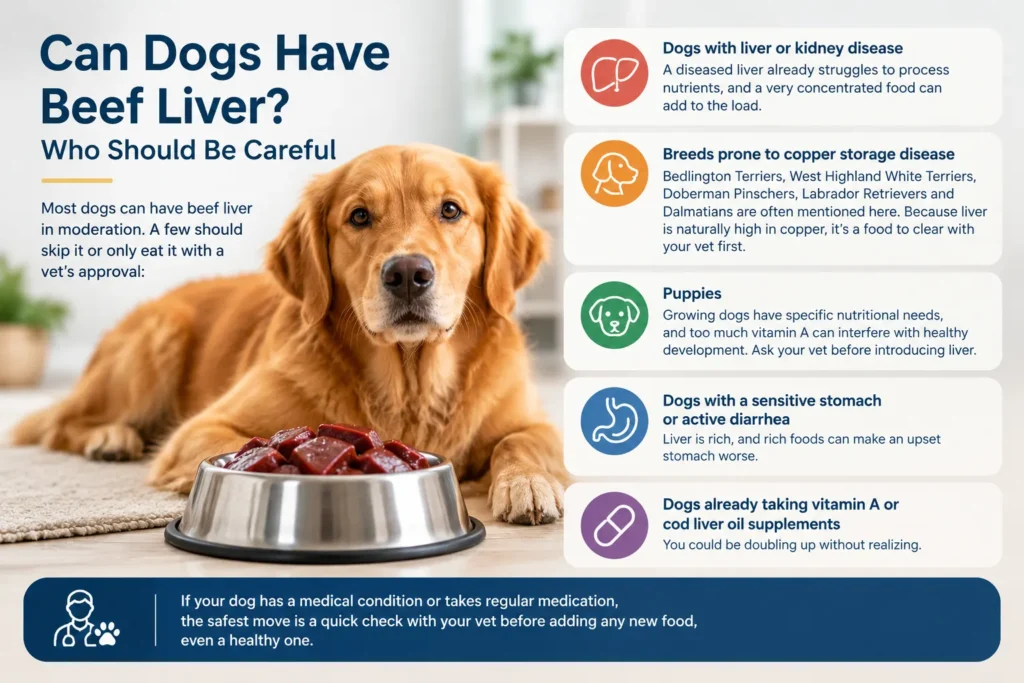
- Dogs with liver or kidney disease: A diseased liver already struggles to process nutrients, and a very concentrated food can add to the load.
- Breeds prone to copper storage disease: Bedlington Terriers, West Highland White Terriers, Doberman Pinschers, and Labrador Retrievers are often mentioned here. Dalmatians come up too. Because liver is naturally high in copper, it’s a food to clear with your vet first.
- Puppies: Growing dogs have specific nutritional needs, and too much vitamin A can interfere with healthy development. Ask your vet before introducing liver.
- Dogs with a sensitive stomach or active diarrhea: Liver is rich, and rich foods can make an upset stomach worse.
- Dogs already taking vitamin A or cod liver oil supplements: You could be doubling up without realizing.
If your dog has a medical condition or takes regular medication, the safest move is a quick check with your vet before adding any new food, even a healthy one.
Is Liver Good for Dogs Every Day?
No. Even though liver is nutritious, it isn’t a good idea to feed it every day. Liver contains a lot of vitamin A, and giving too much over time can lead to vitamin A toxicity (hypervitaminosis A). Most commercial dog foods already contain the vitamin A your dog needs, so daily liver usually adds more than the body can safely handle.
Here’s why this matters. Dogs store excess fat-soluble vitamins instead of flushing them out quickly, the way they do with water-soluble ones. Vitamin A builds up in the body over weeks or months. A dog that gets a little extra every day can slowly drift into the danger zone even though no single serving looked like a problem.
A good working rule is to think in terms of occasional use. A few small pieces a few times a week, counted as part of the treat budget, is a very different thing from a daily handful. If you want to know whether your particular dog’s diet leaves room for liver at all, your vet can look at what they’re already eating.
The Association of American Feed Control Officials (AAFCO) sets the nutrient standards that complete dog foods are formulated to, and vitamin A is part of that picture. It’s a good reminder that your dog’s regular food is already doing a lot of the work.
Signs Your Dog Is Getting Too Much Liver
Too much liver doesn’t usually cause dramatic problems overnight. The early signs can be easy to miss:
- Loss of appetite
- Vomiting, diarrhea, or constipation
- Unusual tiredness or weakness
- Weight loss
- Stiffness, joint pain, or reluctance to move
- In long-term cases, bone changes
If you notice any of these after a stretch of feeding liver, stop and call your vet. Tell them exactly what and how much your dog has been eating. Vitamin A toxicity is usually diagnosed by looking at diet history alongside an exam and tests, so the more detail you can share, the better.
The good news is that this is almost entirely preventable. A small, occasional portion keeps you well away from the problem.
How Much Beef Liver Can I Give My Dog?
There isn’t one number that fits every dog, and you’ll see conflicting amounts online. Some sources talk in percentages of the diet, others in ounces per body weight. That inconsistency is a good reason to be cautious rather than copy a figure blindly.
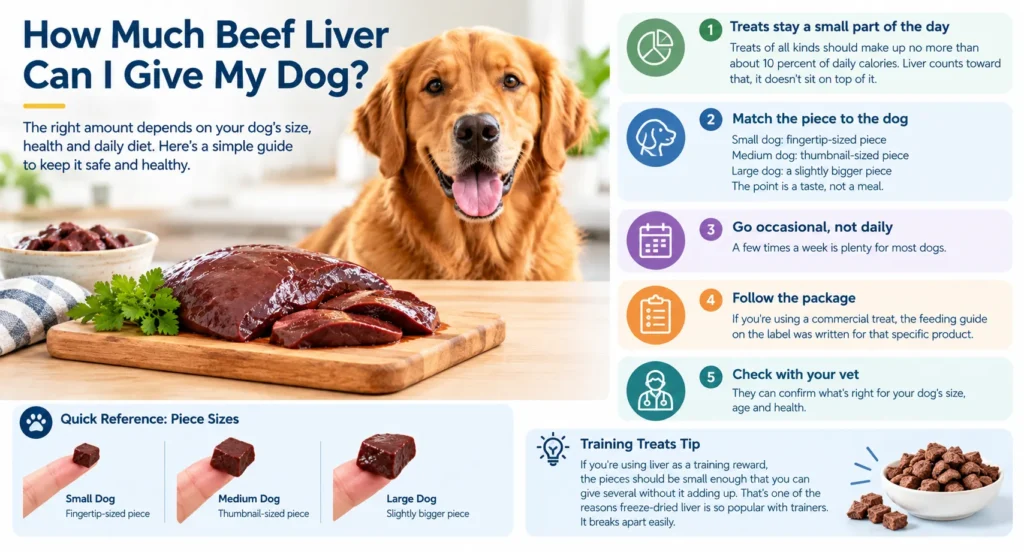
A safer way to think about it:
- Treats should stay a small part of the day: A common guideline from vets is that treats of all kinds make up no more than about 10 percent of daily calories. Liver counts toward that, it doesn’t sit on top of it.
- Match the piece to the dog: For a small dog, think of a tiny fingertip-sized piece. For a medium dog, a thumbnail-sized piece. For a large dog, a slightly bigger piece. The point is a taste, not a meal.
- Go occasional, not daily: A few times a week is plenty for most dogs.
- Follow the package: If you’re using a commercial treat, the feeding guide on the label was written for that specific product.
- Check with your vet: They can confirm what’s right for your dog’s size, age, and health.
If you’re using liver as a training reward, the pieces should be small enough that you can give several without it adding up. That’s one of the reasons freeze-dried liver is so popular with trainers. It breaks apart easily.
Raw vs Cooked vs Freeze-Dried Beef Liver
Each form has its own trade-offs. Here’s a quick comparison:
| Comparison Factor |
Raw |
Cooked |
Freeze-dried |
| Convenience | Needs fridge or freezer and prep | Needs cooking and storage | Shelf-stable, ready to serve |
| Food safety | Higher bacteria risk, careful handling needed | Lower risk once cooked through | Raw-based, so still handle with care |
| Best for | Experienced raw feeders | Owners who prefer a cooked option | Training, travel, easy toppers |
| Portioning | Cut and measure yourself | Cut and measure yourself | Breaks into small pieces easily |
One honest note on freeze-dried raw products: freeze-drying preserves nutrition and flavor, but it isn’t the same as cooking. Wash your hands after handling any raw-based treat, keep it away from your kitchen counters when you can, and store the bag sealed and dry. Those are the same sensible habits you’d use with any raw ingredient.
If you want a simple option, single-ingredient freeze-dried beef liver treats are easy to portion, which makes it much harder to accidentally overfeed. Ours are made from 100 percent USDA-inspected beef liver with nothing added, and that’s exactly the kind of short ingredient list we’d want to see on any bag.
Can Dogs Eat Liver From Other Animals?
The question “can dogs eat liver” usually means more than beef. The answer is yes most kinds are fine in small amounts. Chicken, pork, lamb, and duck liver are all common. What matters is that it’s fresh, plain, and from a source you trust.
Each type has a slightly different nutrient profile. Chicken liver is often described as milder and lower in vitamin A than beef liver, which is why some owners lean toward it. But all liver is rich, and all of it follows the same rules: small portions, occasional use, nothing added.
What you should avoid are unusual or wild-animal livers. Livers from certain marine mammals and wild game can contain very high levels of vitamin A, and they’re not appropriate for dogs.
We’re also working on chicken liver and salmon options as part of our single-ingredient range. You can join the notification list if you’d like to hear when they’re ready.
How to Introduce Liver Safely
Introducing any new food slowly is a good habit. Here’s a simple way to do it:
- Start tiny: Offer a very small piece on day one.
- Watch your dog: Look at their stool, energy, and appetite over the next day or two.
- Increase carefully: If everything looks normal, you can offer small pieces now and then, keeping it occasional.
- Keep a note: If your dog gets loose stools or seems off, pause and check in with your vet.
- Skip the extras: Plain liver only. No sauces, seasonings, or mixed human leftovers.
This slow approach also helps you figure out whether your dog tolerates liver well. Some dogs have no issues at all, while others get an upset stomach from even a small amount, and that’s useful to know early.
How to Choose a Good Beef Liver Treat
Not all liver treats are the same. When you’re comparing options, look for:
- A short ingredient list: Ideally one ingredient: beef liver.
- No fillers, binders, or artificial flavors: There’s no reason for them in a liver treat.
- Clear sourcing: A brand should be able to tell you where the beef comes from and where it’s made.
- A feeding guide: If a bag doesn’t tell you how much to give, that’s a red flag.
- Sensible packaging: A resealable bag helps keep treats fresh.
If you want to learn more about how we think about ingredients and sourcing, you can read our story and browse more guides in The Prime Journal.
Conclusion
So, is beef liver good for dogs? For most healthy dogs, yes, as long as it’s plain, portioned small, and not a daily habit. It’s a genuinely nutrient-rich food that dogs adore, which makes it a great training reward and a nice little boost on top of regular meals.
The things to remember are simple. Keep portions small. Keep it occasional. Skip it, or ask your vet first, if your dog has a liver condition, belongs to a copper-sensitive breed, or is still a puppy. And whatever form you choose, keep it plain and fresh.
Get those basics right, and liver can be one of the easiest, most enjoyable treats in your dog’s routine.
Frequently Asked Questions
1. Is liver good for dogs?
Yes, in small amounts. Liver is rich in protein, vitamin A, B vitamins, iron, and zinc. Because it’s so concentrated, it works best as an occasional treat or topper, not a daily meal.
2. Can dogs eat liver every day?
It’s best not to. Daily liver can raise vitamin A to unsafe levels over time. A few small pieces a few times a week is a safer pattern for most healthy dogs.
3. Can puppies eat beef liver?
Some can, but puppies have specific nutritional needs. Too much vitamin A can affect growing bones, so check with your vet before offering it.
4. Is raw beef liver safe for dogs?
Some owners feed it raw, but raw meat carries a risk of bacteria like Salmonella and Listeria for both dogs and people. If you choose raw, handle it carefully and clean surfaces and hands afterwards.
5. Can beef liver cause diarrhea?
It can. Liver is rich, and too much can upset the stomach. If your dog already has diarrhea, it’s better to skip liver until things settle.
6. Is beef liver or chicken liver better for dogs?
Both can work in moderation. Chicken liver is often described as lower in vitamin A, while beef liver is a popular, nutrient-dense choice. Neither should be fed in large amounts.
7. Can dogs have beef liver if they have a medical condition?
It depends on the condition. Dogs with liver or kidney problems, or copper-sensitive breeds, should only have liver after a vet approves it.
